Pyromellitic Dianhydride | 89-32-7
Cas No :
89-32-7
Synonyms :
Form :
Solid
Molecular Weight :
218.12 G/mol
Molecular Formula :
C10H2O6
Boiling Point :
410 °c
Flash Point :
295 °c
Solubility :
Sparingly Soluble In Water; Soluble In Acetone, Dmf, Dmso
Description :
Pyromellitic Dianhydride Supplier and Exporter for the USA
Chemical Bull is a Pyromellitic Dianhydride supplier, distributor, wholesaler, and exporter for the USA, supporting commercial requirements for polyimide manufacturing, heat-resistant polymer materials, epoxy curing systems, and selected polyester modification processes.
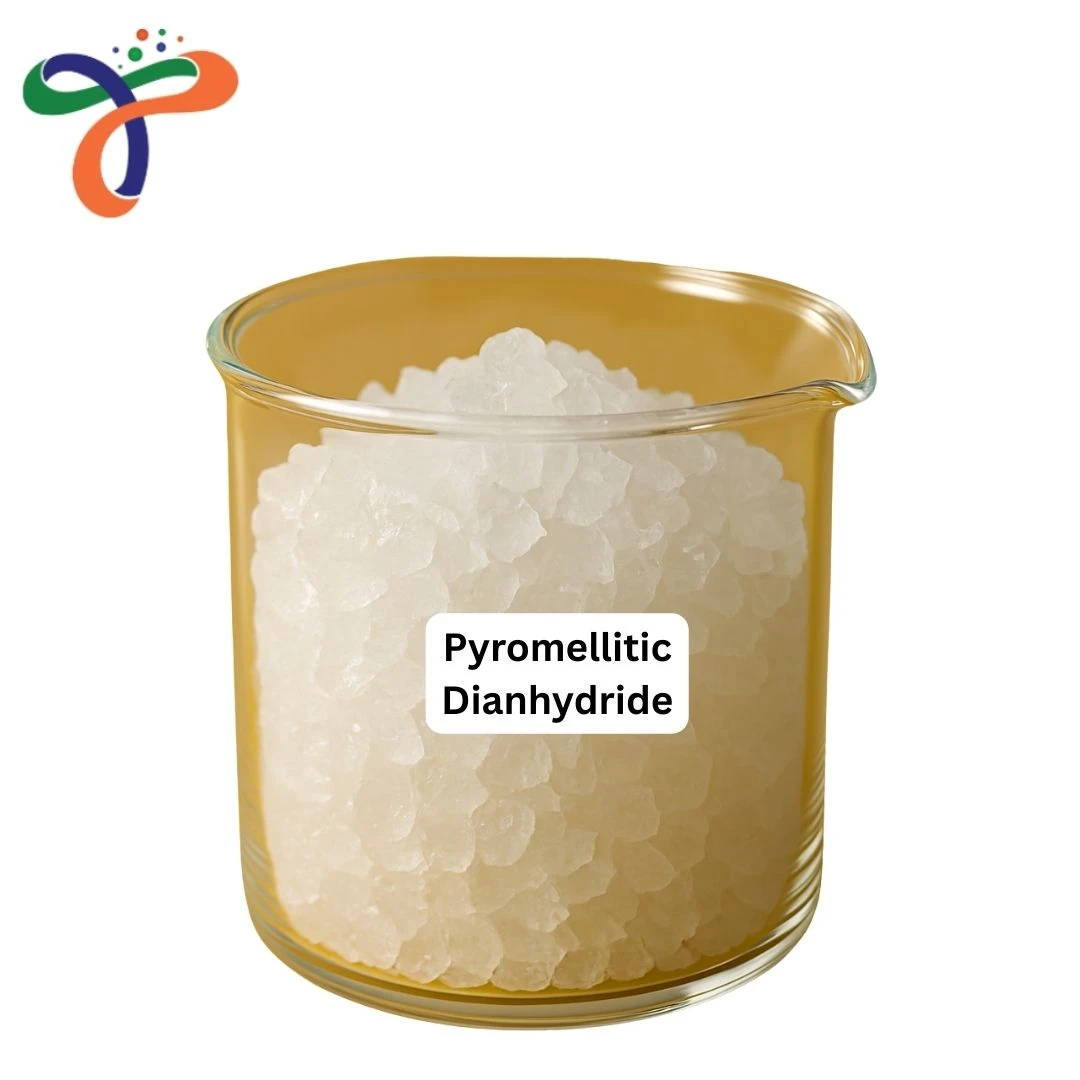
Pyromellitic Dianhydride, commonly abbreviated as PMDA, is an aromatic dianhydride used mainly as a reactive monomer for polyimide synthesis. USA manufacturers evaluate PMDA based on purity, moisture, impurity profile, particle characteristics, reaction performance, COA, SDS, and batch consistency.
Quick Answer
Pyromellitic Dianhydride, CAS 89-32-7, is primarily used as a monomer for polyimide production. It also serves as a curing agent in selected epoxy systems and a chain extender in polyester processing. Buyers should match purity, moisture, and reactive functionality to their formulation and manufacturing requirements.
What Is Pyromellitic Dianhydride?
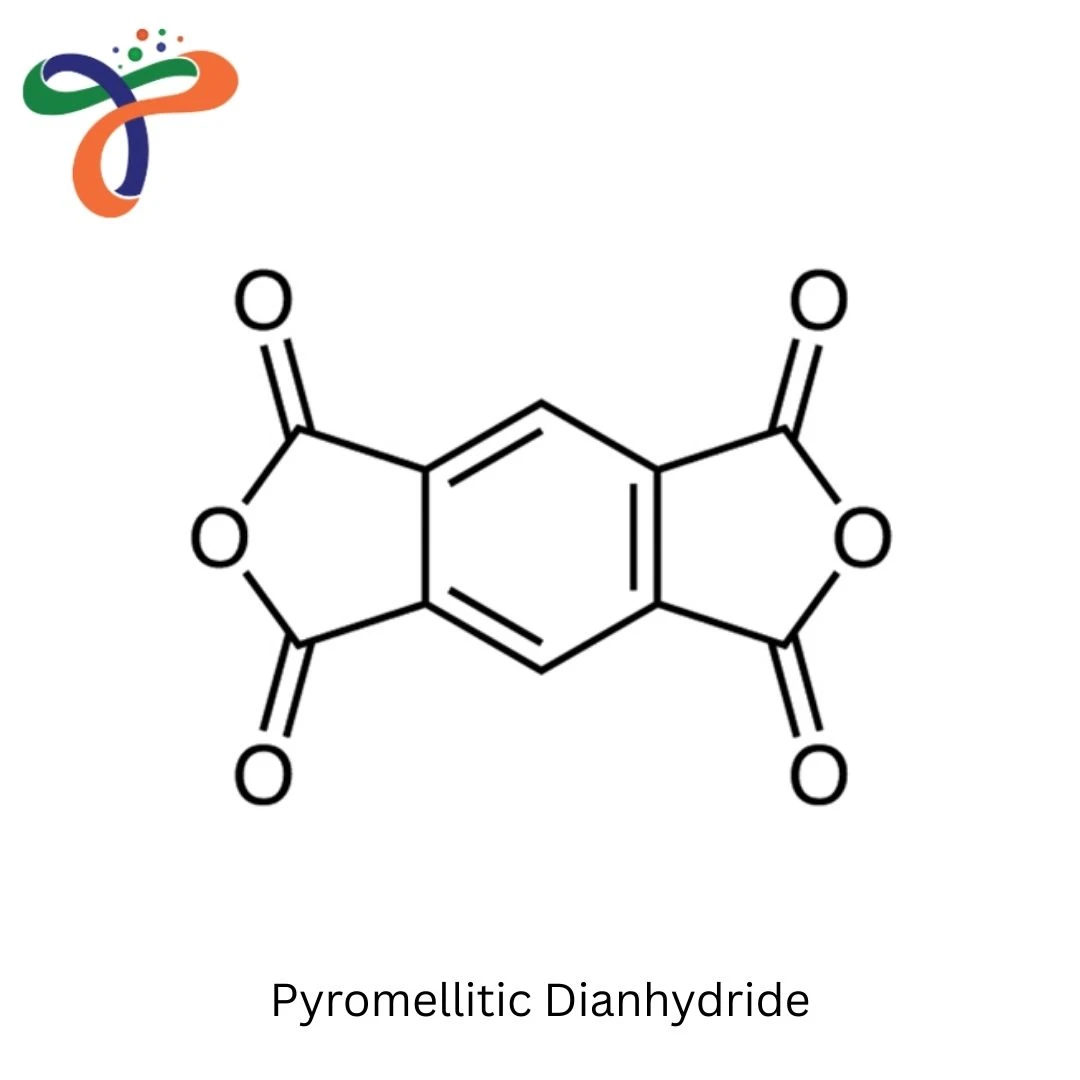
Pyromellitic Dianhydride is an aromatic compound containing two anhydride groups attached to a benzene-based structure.
Its reactive groups allow it to participate in polymer synthesis, epoxy curing, and selected polyester chain-extension reactions.
In polyimide manufacturing, PMDA reacts with suitable diamines to form a polyamic acid precursor, which is subsequently converted into a polyimide through imidization.
PMDA is commonly sourced by polyimide producers, electronic material manufacturers, specialty polymer companies, epoxy formulators, polyester compounders, and industrial procurement teams.
Pyromellitic Dianhydride Product Information
Product Name: Pyromellitic Dianhydride
Common Abbreviation: PMDA
CAS Number: 89-32-7
Primary Functions: Polyimide monomer, selected epoxy curing agent, and polyester chain extender
Confirm purity, moisture, impurity limits, and particle specifications from the supplied COA and technical documentation.
Pyromellitic Dianhydride Applications for Industrial Manufacturing
Polyimide Resin Manufacturing
PMDA is used as a dianhydride monomer in aromatic polyimide synthesis.
Manufacturers combine it with suitable diamines to produce polymer systems designed for demanding thermal, mechanical, and electrical applications. Monomer quality and reaction control are important for consistent polymer properties.
Heat-Resistant Polyimide Films
Pyromellitic Dianhydride is used in the production of selected polyimide films for electronics and industrial insulation.
The finished film’s thermal resistance, flexibility, and dielectric performance depend on the polymer composition, film-forming process, and imidization conditions.
Electronic and Electrical Materials
PMDA-derived polyimides are used in selected flexible circuit substrates, insulating films, and electronic material systems.
Buyers should define application-specific impurity and quality limits. The suitability of the finished polyimide must be evaluated against electrical, dimensional, and thermal requirements.
Epoxy Resin Curing Systems
Pyromellitic Dianhydride serves as an anhydride curing agent in selected epoxy formulations.
Formulators should evaluate resin compatibility, dispersion, catalyst selection, mixing proportions, and cure schedule. PMDA requires a curing process suited to the specific epoxy system.
PET Chain Extension
PMDA is used as a reactive chain extender in selected Polyethylene Terephthalate processing systems, including recycled PET modification.
Controlled addition can increase molecular weight and introduce branching, changing melt viscosity and melt strength. Dosage, moisture, temperature, and residence time must be managed to achieve the required processing behavior.
Specialty Polyester Compounding
Pyromellitic Dianhydride is used in selected reactive polyester compounding and rheology-modification processes.
Compounders evaluate its effect on melt behavior, processability, and finished properties. Excessive reaction or branching can adversely affect processing, so formulation trials are essential.
Why Manufacturers Source Pyromellitic Dianhydride
Established Polyimide Building Block
PMDA provides reactive dianhydride functionality for producing selected aromatic polyimide structures.
Relevant to Heat-Resistant Materials
PMDA-based polyimides support applications where the finished polymer must meet demanding thermal and insulation requirements.
Useful in Selected Epoxy Systems
Its anhydride groups participate in epoxy curing when the resin, catalyst, and processing conditions are appropriately matched.
Supports Polyester Modification
PMDA offers a reactive route for adjusting molecular structure and melt behavior in compatible polyester processes.
Pyromellitic Dianhydride Supplier for USA Manufacturers
When comparing a Pyromellitic Dianhydride supplier for the USA, procurement teams should review purity, moisture, relevant impurities, particle characteristics, packaging integrity, and batch consistency.
Chemical Bull supports commercial sourcing enquiries from polyimide manufacturers, electronic material producers, epoxy formulators, polyester processors, specialty chemical businesses, and distributors across the United States.
For recurring requirements, confirm the approved specification, minimum order quantity, packaging, lead time, and documentation before placing an order.
Related Polymer and Resin Chemicals
Manufacturers sourcing Pyromellitic Dianhydride may also explore Epoxy Resin, Polyethylene Terephthalate, and Succinic Anhydride.
These materials have different roles in polymer processing and selected resin formulations. Selection should follow the intended chemistry and technical specification.
Pyromellitic Dianhydride SDS and Documentation
Chemical Bull can provide available Pyromellitic Dianhydride SDS, COA, TDS, and product specifications with commercial supply enquiries.
PMDA is moisture-sensitive. Buyers should follow the supplied documentation for handling, dust control, storage, and transportation, keeping the material protected from moisture and contamination.
Review the exact grade’s purity, moisture, and application-specific quality limits before commercial approval.
Buy Pyromellitic Dianhydride in Bulk for the USA
Chemical Bull supports bulk Pyromellitic Dianhydride sourcing for polymer manufacturers, resin formulators, compounders, distributors, and industrial procurement teams.
PMDA pricing depends on purity, specification, order quantity, packaging, and delivery terms. Include your application, documentation needs, and purchasing schedule when requesting a quotation.
Frequently Asked Questions
-
What is Pyromellitic Dianhydride?
Pyromellitic Dianhydride, or PMDA, is an aromatic dianhydride used mainly as a reactive monomer in polyimide manufacturing.
-
What is the CAS number of Pyromellitic Dianhydride?
The CAS number of Pyromellitic Dianhydride is 89-32-7.
-
What is PMDA used for?
PMDA is used in polyimide synthesis, selected epoxy curing systems, and polyester chain-extension or reactive modification processes.
-
Why is PMDA used in polyimide manufacturing?
Its two anhydride groups react with suitable diamines to form precursors that are converted into polyimides through imidization.
-
Can PMDA be used as a PET chain extender?
Yes. PMDA is used in selected PET reactive-extrusion processes to modify molecular weight, branching, and melt behavior. Suitability depends on dosage and processing conditions.
-
Can Chemical Bull support bulk PMDA supply for the USA?
Chemical Bull supports commercial PMDA sourcing enquiries for USA manufacturers and distributors. Share your purity requirement, quantity, application, and destination to confirm availability and quotation terms.