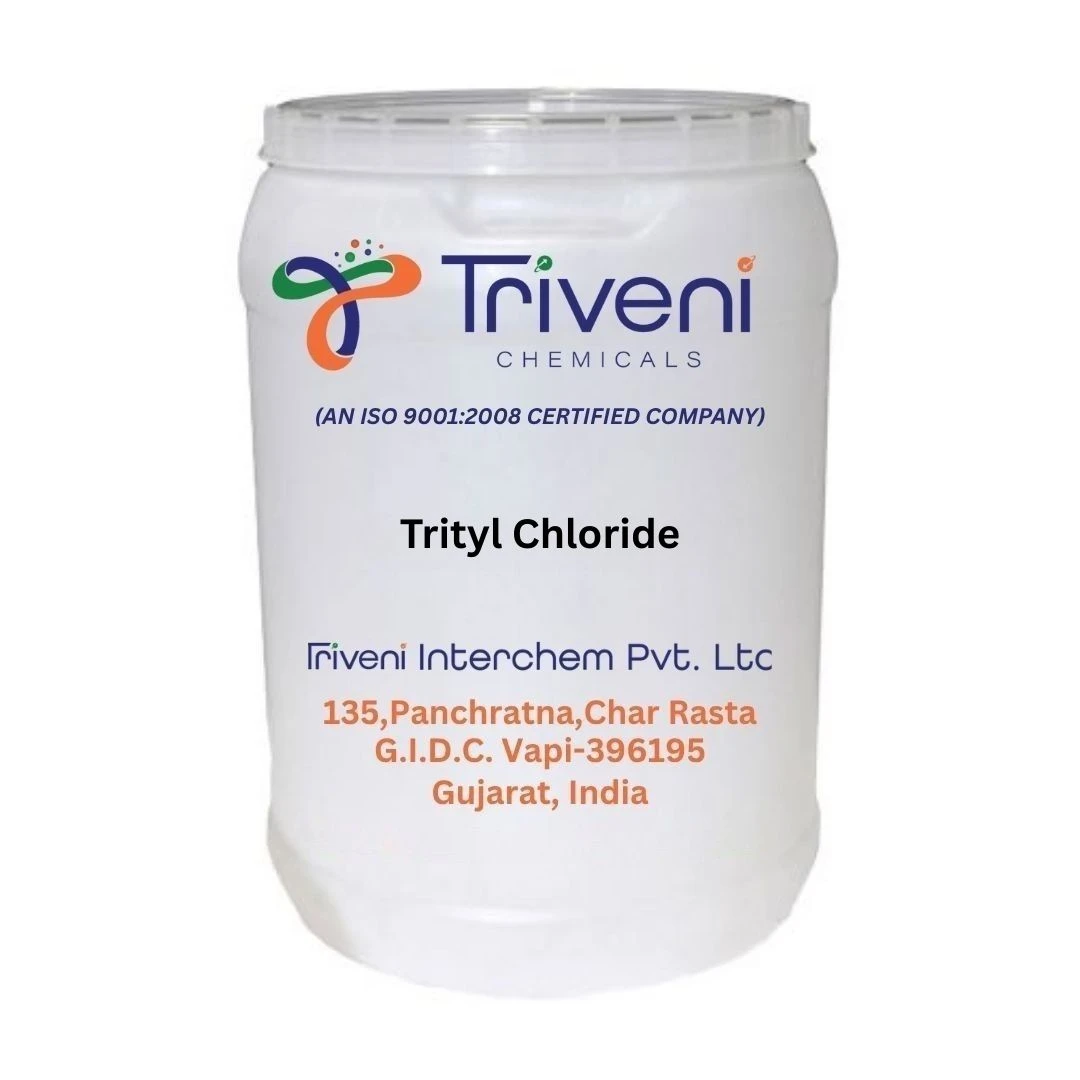
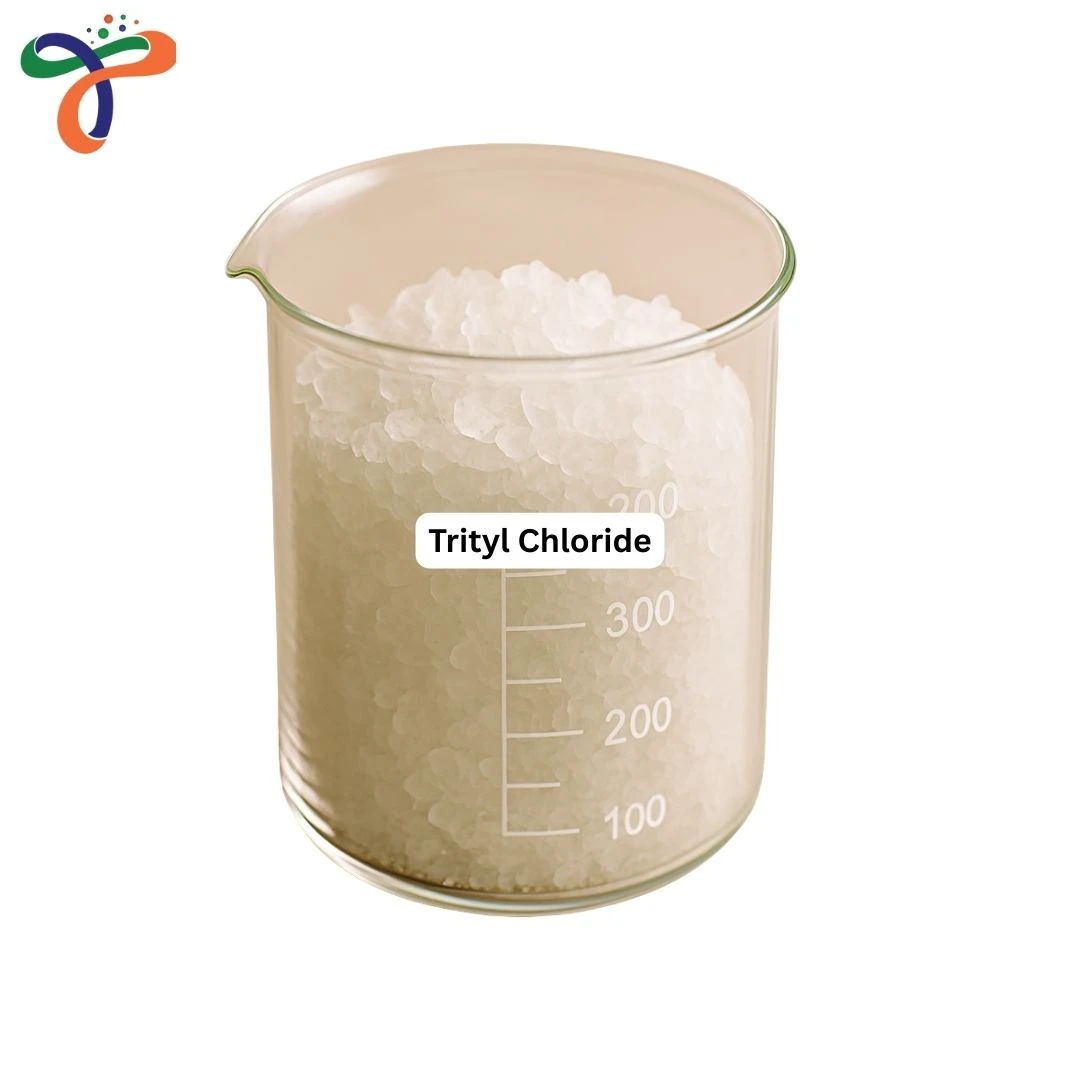
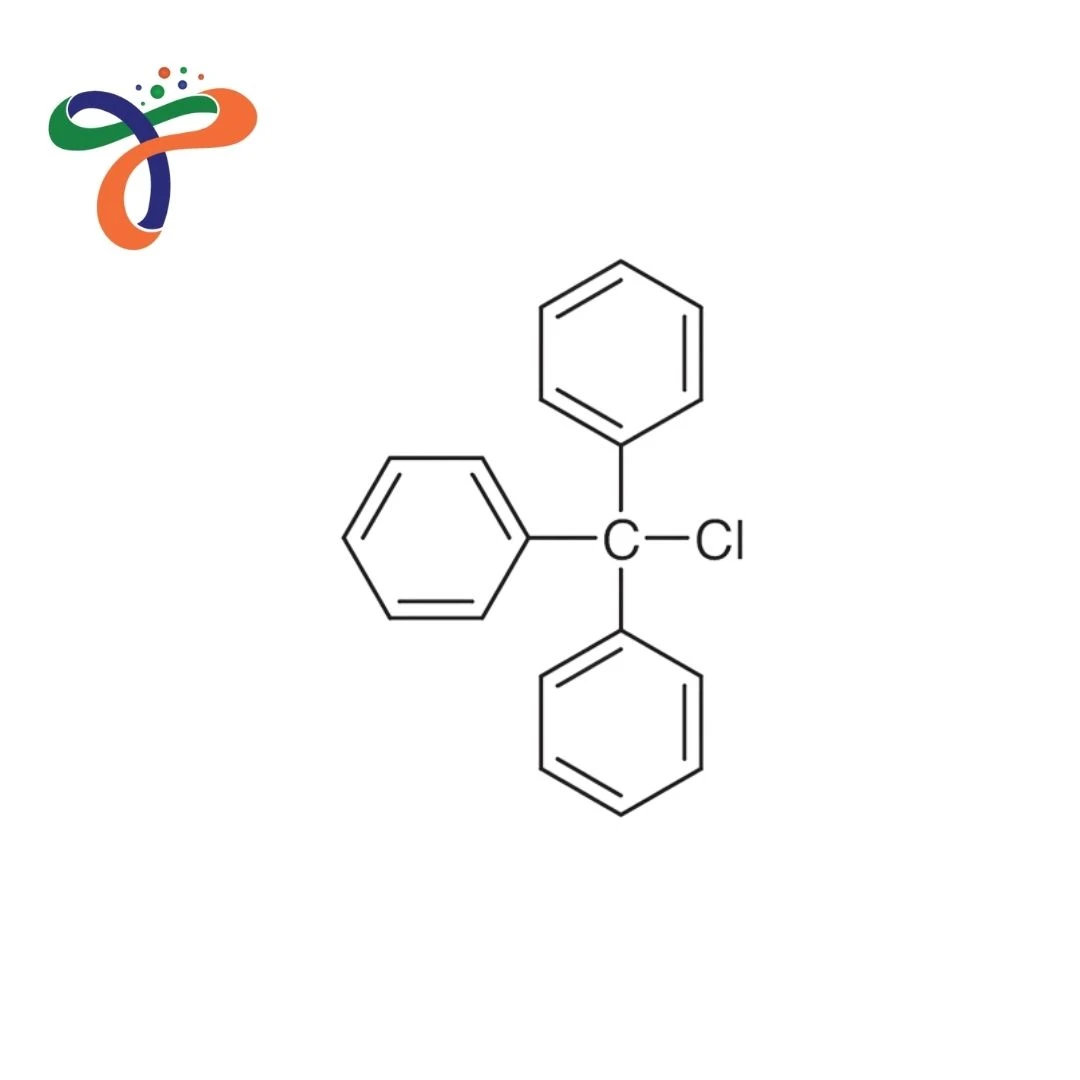
Trityl Chloride | 76-83-5
Cas No :
76-83-5
Molecular Weight :
278.76 G/mol
Molecular Formula :
C19H15CL
Boiling Point :
280 °c
Melting Point :
66 °c
Flash Point :
60 °c
Solubility :
Insoluble In Water; Soluble In Organic Solvents Such As Dichloromethane, Chloroform, Benzene, Toluene
Description :
Overview of Trityl Chloride
Trityl Chloride (CAS: 2756-39-6) is an organic chloride compound and a highly versatile reagent in the field of organic chemistry. It consists of a trityl group (C₁₇H₁₆) attached to a chlorine atom and is commonly used for the protection of alcohols, phenols, and amines during chemical synthesis. The trityl group (also known as triphenylmethyl group) is a bulky and stable group that provides significant steric hindrance, allowing chemists to selectively protect specific functional groups in organic reactions.
Trityl Chloride is used as a protecting group for alcohols, amines, and carboxylic acids during the synthesis of pharmaceuticals, fine chemicals, and specialty chemicals. It plays an essential role in synthetic organic chemistry by offering a way to block reactive sites in molecules, enabling further reactions to take place without interference.
ChemicalBull offers a range of Trityl Chloride and other protecting group reagents suitable for chemical synthesis in pharmaceutical and laboratory applications.
Applications of Trityl Chloride
Pharmaceutical Synthesis & Drug Development
-
Used as a protecting group in the synthesis of pharmaceutical intermediates and active pharmaceutical ingredients (APIs)
-
Protects alcohols and amines during multistep synthesis of complex drug molecules
-
Facilitates the selective protection of functional groups, allowing for precise reaction control in the pharmaceutical industry
-
Plays a key role in the preparation of targeted drug delivery systems and bioactive compounds
Organic Synthesis & Chemical Reactions
-
Trityl Chloride is extensively used as a protecting group for alcohols, phenols, amines, and carboxylic acids in organic synthesis
-
Facilitates the synthesis of complex organic molecules by temporarily blocking certain reactive sites during chemical reactions
-
Commonly employed in the synthesis of heterocyclic compounds and polymeric materials
-
Used in the preparation of chiral intermediates and fine chemicals for various chemical industries
Laboratory Research & Chemical Engineering
-
Trityl Chloride is a key reagent for scientific research and synthetic chemistry
-
Used in laboratories for the synthesis of novel compounds, material science, and bioorganic chemistry
-
Important in research on organic reactions, reaction mechanisms, and catalysis
Specialty Chemicals & Fine Chemicals
-
Used in the synthesis of specialty chemicals and fine chemicals, including chiral molecules and pharmaceutical precursors
-
Plays a role in polymerization processes and the production of functionalized polymers
-
Utilized in the design and synthesis of new materials and organic products
Safety & Handling Guidelines
-
Wear appropriate protective equipment, such as gloves, goggles, and lab coats to prevent contact with skin and eyes
-
Use in well-ventilated areas to avoid inhalation of vapors or dust
-
Store in tightly sealed containers in a cool, dry place, away from moisture, heat, and oxidizing agents
-
Avoid direct contact with skin and eyes; in case of exposure, wash immediately with water and seek medical attention
-
Dispose of according to local regulations for hazardous chemical waste
Where to Buy Trityl Chloride?
Trityl Chloride Manufacturer
ChemicalBull supplies high-quality Trityl Chloride, suitable for organic synthesis, pharmaceutical manufacturing, and chemical reactions.
Trityl Chloride Supplier & Distributor
-
Available in bulk and laboratory-scale packaging
-
Ideal for chemical protection, pharmaceutical synthesis, and specialty chemical applications
-
COA, MSDS, and technical specifications available
Trityl Chloride MSDS
-
May cause irritation to skin, eyes, and the respiratory system
-
Wear personal protective equipment such as gloves, goggles, and lab coats when handling Trityl Chloride
-
Store away from moisture, oxidizing agents, and sources of heat
-
In case of spill, follow MSDS guidelines for containment and clean-up procedures
-
Refer to MSDS for first aid instructions, fire safety, and spill control
Frequently Asked Questions (FAQs)
-
What is the molecular formula of Trityl Chloride?
Molecular Formula: C₁₇H₁₆Cl
Molecular Weight: 256.77 g/mol -
What is Trityl Chloride used for?
Trityl Chloride is mainly used as a protecting group for amines, alcohols, and carboxylic acids during the synthesis of pharmaceuticals, fine chemicals, and organic compounds. -
Is Trityl Chloride hazardous?
Yes, it may cause irritation to skin, eyes, and the respiratory system. Proper protective equipment should be used when handling. -
How should Trityl Chloride be stored?
Store in airtight containers in a cool, dry place, away from moisture, heat, and oxidizing agents. -
Which industries use Trityl Chloride?
Trityl Chloride is widely used in pharmaceutical synthesis, organic chemistry, research laboratories, chemical engineering, and the production of specialty chemicals.
ChemicalBull supplies Trityl Chloride across India, serving customers in Andhra Pradesh, Arunachal Pradesh, Assam, Bihar, Chhattisgarh, Goa, Gujarat, Haryana, Himachal Pradesh, Jharkhand, Karnataka, Kerala, Madhya Pradesh, Maharashtra, Manipur, Meghalaya, Mizoram, Nagaland, Odisha, Punjab, Rajasthan, Sikkim, Tamil Nadu, Telangana, Tripura, Uttar Pradesh, Uttarakhand, and West Bengal, as well as the Union Territories of Andaman & Nicobar Islands, Chandigarh, Dadra & Nagar Haveli and Daman & Diu, Delhi, Jammu & Kashmir, Ladakh, Lakshadweep, and Puducherry. We serve pharmaceutical, chemical, research, academic, laboratory, manufacturing, and industrial customers with reliable nationwide delivery.